News
“Sport must point the way towards peace”
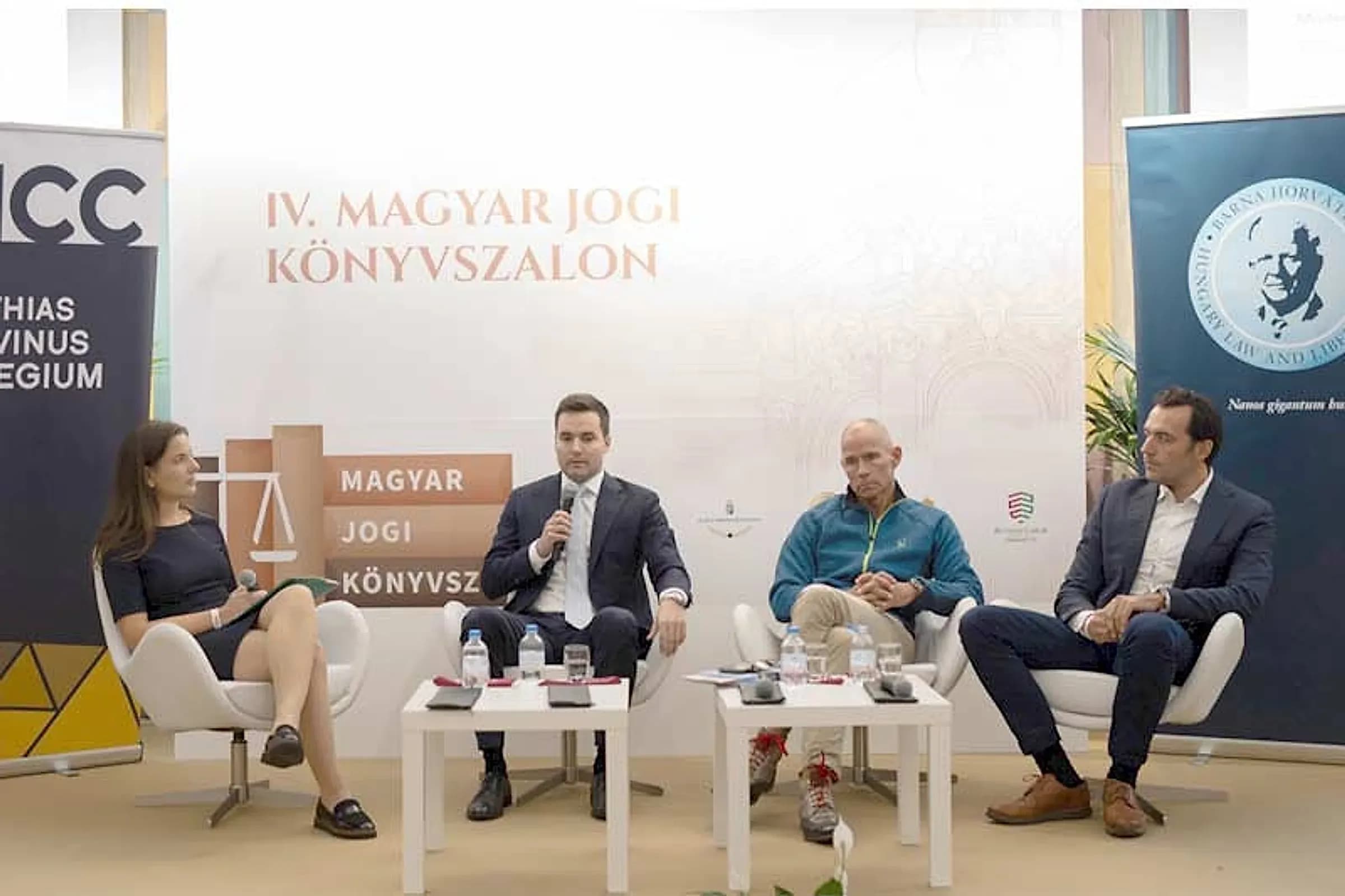
“Sport is never an end in itself: it stands in the service of humanity, and it must point the way towards peace.” That was one of the principal conclusions of the MCC panel discussion at the 4th Hungarian Legal Book Salon, in which the sports lawyers Zsigmond Nagy and Ákos Tallár, together with Miklós Gór-Nagy — world champion water polo player and MCC's commissioner for mental and physical education — shared their views on the relationship between sport and law. The discussion was chaired by Gabriella Érdi, researcher at MCC's International Law Workshop.The panel examined in detail the legal disputes that arose during the Paris Olympic Games and, in that light, the wider relationship between sport and law, and the growing role of law and diplomacy in sport. In connection with the case of the Algerian boxer, for example, the panellists stressed that sports regulation carries an exceptionally heavy responsibility for ensuring that sport is governed by coherent, clean and transparent conditions. They discussed the monopoly position of the Court of Arbitration for Sport (CAS) in Lausanne, and both the merits and the flaws of its procedure, which can fundamentally shape an athlete's career. The panellists analysed the intricate relationship between athletes, federations and regulation, and agreed: however large an industry sport becomes, the athlete must always remain at the centre of the rules. They also spoke of the growing role of the lawyer, who is increasingly indispensable to the teams that accompany and support an athlete — disputes arising during competition ever more often have to be resolved in a very short space of time, and that is impossible without practical command of both substantive and procedural rules. The panellists agreed that the ultimate meaning of sport is not an end in itself: like culture, it is the service of humanity, and so it must always point the way towards peace.